
Human beings are amazing. How we are wired up is endlessly fascinating to me.
I studied horse psychology for a few years. How and why horses do what they do and how they think. With horses, when the flight/fight response is triggered the horse will want to move its feet and run away or will simply freeze or shut down and hide inside themselves. Sometimes horses have a fight response, stubborn behaviour or even aggression appears.
Humans have this flight/fight response as well. I may be preaching to the choir here but indulge me because I think we are only scratching the surface of what makes us tick.
You drive around a corner and a car is aquaplaning toward you and misses you by ‘that much.’ You are left shaking and sweating and it takes a while for you to calm down. You may need to pull over and get your breathing and your heart rate under control. Your physical response is immediate and designed to keep you safe. It kicks in and when all is well it calms down. This is the flight/fight response engaging to keep us safe and its obvious when it’s extreme.
For our ancestors it meant the difference between living and dying. Getting eaten or surviving. They were being stalked by wild animals. This response was meant to be a short burst to get us out of a tricky situation. There are not as many wild animals these days, the odd huntsman spider, but other than that modern life has other dilemmas.
Stress is a big part of modern life. That’s our wild animal. Technology was supposed to make our lives easier. In a lot of ways it has and we are more connected than ever before, to the world and its dog. Which brings stress right into our pockets.
I think we are more disconnected from ourselves which means we are often unaware that the flight switch is on. Unless it’s an emergency we can have our flight switch humming along in the background keeping us in a constant alert state, which is exhausting.
Did you know that the flight/fight response can be triggered or disengaged depending on your posture? Standing with your weight on your toes tells your brain ‘get ready to run.’ And placing the weight on your heels does the opposite. Standing with your hands on your hips for two minutes in a superhero pose creates confidence. This has been tested by people who know stuff, it’s not something I came up with.
Take a look at Amy Cuddy’s 2012 TED talk which has been viewed more than 31 million times. Her research shows that our body language not only affects how others see us, but how we see ourselves. By holding our bodies in a position of power, our hormones react immediately — our testosterone goes up and our cortisol goes down — resulting in calm confidence that we feel and others experience. Power posing is just one aspect of what she calls ‘presence,’ the subject of her book, ‘Presence: Bringing Your Boldest Self to Your Biggest Challenges.’
When I worked in horse therapy last year, the first thing we did when clients arrived was teach them the power pose. We would guide them into feeling the ground under their feet and the wind on their skin, and get them to shift their weight onto their heels. Then we would stand in the ‘superhero position’ and put a timer on for two minutes. All this before greeting the horses and the horses could tell the difference.
Imagine if parents did this simple two minute exercise with their children every morning. I don’t understand how it works, but it does.
We know mindfulness, self care, meditation etc are good for our well being. Let me add another.
Recently I found neurographics. Pavel Piskarev, a Russian psychologist, discovered a way of drawing that seems to affect the brain. He claims this method of drawing creates new neural pathways. I started drawing using his technique and as I draw, I am aware that something is happening, it’s a strange sensation. New neural pathways has to be a good thing right? Like learning a new skill or language.

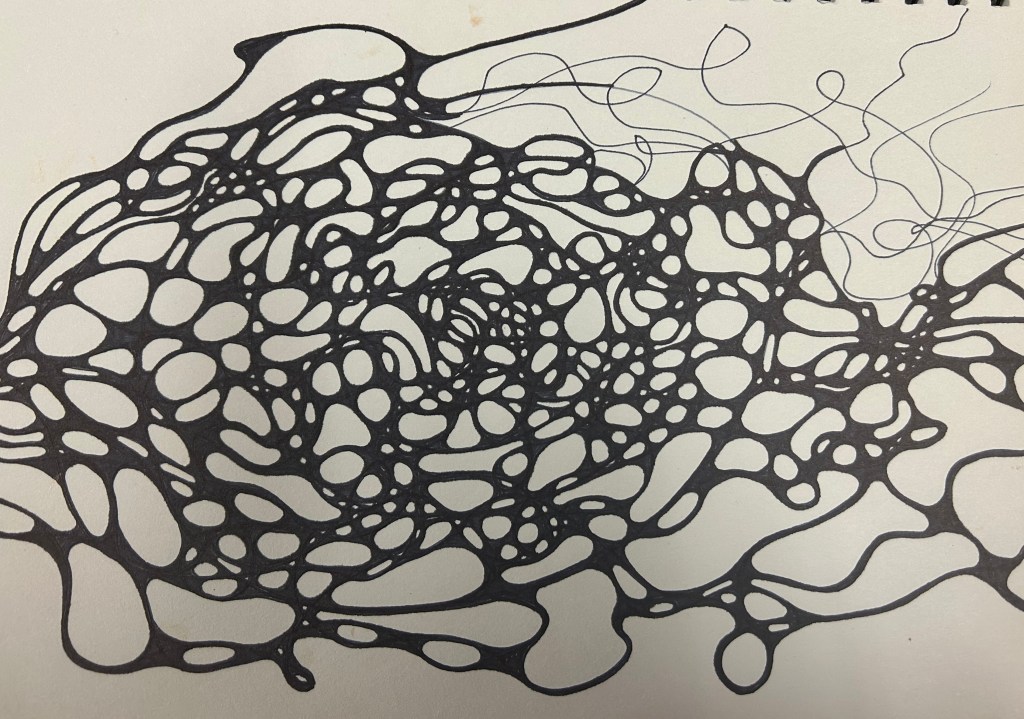
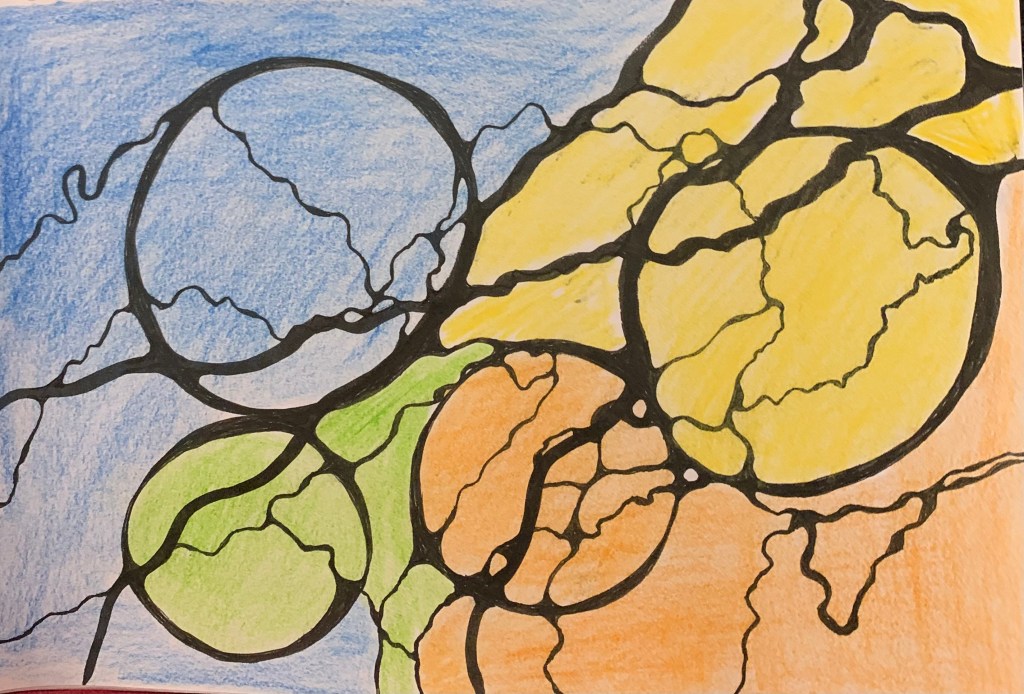
In neurographics, you draw a line and when you feel like following a known pattern, you go the other way. Our brains like repetitive patterns because they are safe and known. With neurographics you feel the need to go one way and do the opposite. What you end up with is a wobbly line, a line that doesn’t repeat itself. Then you spend time rounding all the intersections from the multiple lines you’ve drawn. The lines need to flow with no sharp joins. The drawing ends up looking like cell structures or rivers or tree branches. I think neurographics may play with the flight switch. Don’t quote me on it, I’m only guessing. It’s early days and I’m learning.
There’s a lot more to it and I encourage you to look it up and discover it for yourself.
Then, like me, you will start seeing neurographic lines everywhere because there are no straight lines in nature.

I know switching off that flight mode and allowing myself to rest is good for me. And when it is as simple as drawing a line why wouldn’t you?
Thank you for reading. Stay warm! Unless you’re in the Northern Hemisphere, in which case, stay cool!
 Rhiannon Dowding - Writer
Lovely post, Rhiannon!
Back in my school counselling days, I used to teach the Power Pose to students and encourage them to use it before exams or job interviews. I love your point about the horses noticing the difference. That is fascinating.
Thanks for the Piskarev reference. I saw a demo of neurographics on Instagram, but there was no information about the background. I’m really keen to look into it!
LikeLiked by 1 person
Thanks Ali. Horses are amazing, so perceptive. A helpful You Tuber I found is Alina Smolyanski. She’s one of Pavel’s trainers. Not a lot of English information out there yet. 😉
LikeLiked by 1 person
Fascinating. Thanks for sharing, Rhiannon 😊.
LikeLiked by 1 person
Thank you for reading. I loved you last blog. I read it and got interrupted before I could respond. Always a good read.
LikeLiked by 1 person
Thanks, Rhiannon 😊.
LikeLike
Very interesting read! I especially loved learning about Power posing. I must try it sometime. I am also very intrigued by neurographics. I’ll be looking it up to see what it’s all about. I’ve done alot of Zentangle and it is all repetitive patterns which are very calming. It would be great to see what else I can do when a pencil and paper. Thanks for a great post!
LikeLiked by 1 person
Thank you for stopping by. I love zentangles too. Neurographic drawing is endlessly fascinating. I would be curious to know if you notice a difference after trying the power pose. The research is sound and I know my horse looks at me differently. 😉
LikeLiked by 1 person
I’ll let you know once I’ve had an opportunity to try it. I really think it will work though. I’m optimistic 😀
LikeLiked by 1 person