
To give advice or not to give advice, that is the question.
Funny old thing advice. People ask for it but rarely do they want or need it. They think they do, but once they have your wisdom things don’t always work out.
Somewhere along the road I learned that people already know what they need. They know what action needs to be taken, what needs to be said to remedy the situation, what job to go for, what house to buy etc. Often they just need to hear themselves say it first, or hear it as they say it.
I was a rebel growing up. Not the leather jacket type, I was more an oppositional type. If someone said don’t do it, I would feel compelled to do whatever it was. If someone said ‘you can’t do that,’ I would want to prove I could. This made it impossible for anyone to give me advice, especially my family. I could give advice, but I couldn’t take it. I excelled at giving advice. In any conversation, where someone told me something personal, I saw it as an opportunity for them to hear my opinion. I thought they were dying to hear what I had say.
I wasn’t paying attention or being in any way truly aware of the other person. I was happy to meddle in other people’s lives. Until it backfired one too many times. A friend would break up with their horrible boyfriend and I would tell them what I really thought of him. The next minute they would get back together and both hate me.
Or another friend who told me they were going to name their baby ‘Clay.’ I waxed lyrical about the reasons it was a bad idea to name their child Clay. I thought I was very persuasive and full of insight. The baby was born and they named him Clay. If only I hadn’t given them my opinion and if only I hadn’t said, ‘Clay as in mud?’
After years of awkward embarrassing moments, I eventually figured out my advice was not what everyone needed. I discovered it is far better to ask questions and listen. Now, if anyone asks me for advice, instead of giving them a dose of my ‘wisdom,’ I will ask a question. What do you think? How does that make you feel? What will you do about it? Have you thought about what you will do next?
Questions help people sort out their own thoughts and come up with solutions. Anything else is controlling their lives or worse, becoming their rescuer.
Trust me, it’s not your job to rescue them.
Some of us are born rescuers with heightened empathy and a keen awareness of suffering. We are the peacekeepers in our families. It’s hard to see another person struggling and it tends to bring out a need in us to swoop in and save.

I have a tendency to take on the problems of the world and almost kill myself trying to fix everything. I can quickly become the ringmaster of several circuses and lots of monkeys.
Photo by William Fitzgibbon on Unsplash
When I was nine or ten my dad would get frustrated with me because I would bring home strays. Finding and caring for lost dogs, stray cats, birds with broken wings and even kids with bad parents was normal for me. I didn’t know how to be anyone else. Dad would say to me, ‘You can’t be the conscience of the world.’
I hated him saying it. It was unfair. If I didn’t do it, who would? Someone had to.
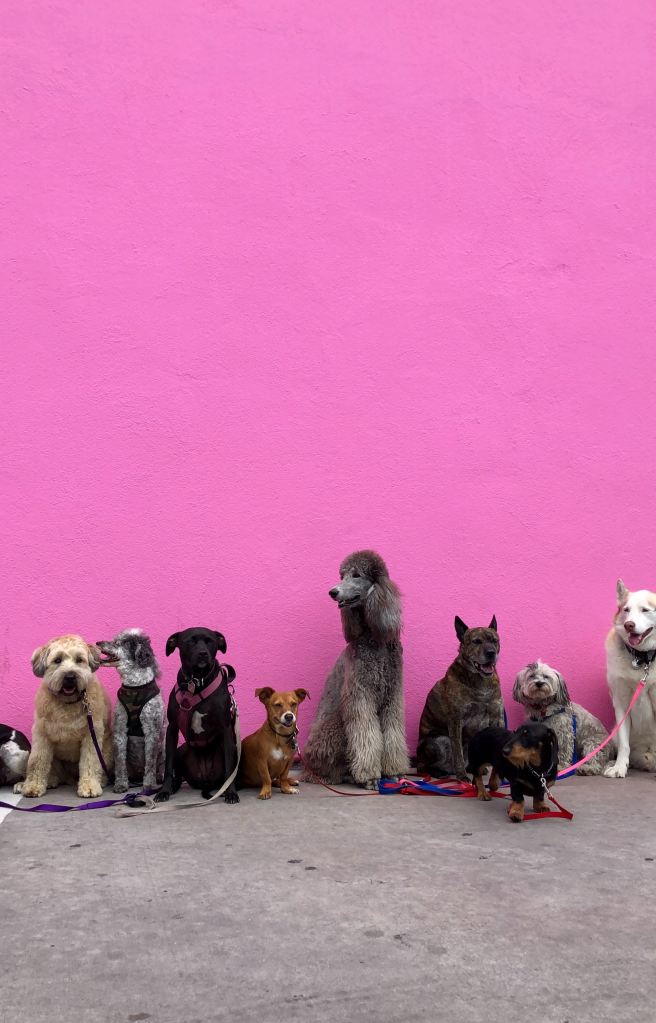
Dad wanted me to disengage, it’s how he interacted with the world. He was also sick of all the strays.
Photo by Hannah Lim on Unsplash
Now that I am much older and wiser, I have a phrase that has helped me when I feel compelled to jump in and save someone.
‘Not my circus, not my monkeys.’
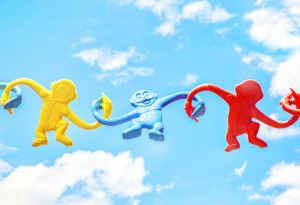
I don’t say it to the person who is desperately asking for help, that would be harsh. I simply think it to remind myself not to jump in, take over or go into full on rescue mode.
Photo by Park Troopers on Unsplash
I don’t use this phrase to disengage from them or because I can’t be bothered. It’s not meant to be flippant or dismissive. The opposite is true. I feel deeply because I pick up on subtle cues and intuitively know how others are feeling and it draws out the empathy in me.
When I say to myself, ‘not my circus, not my monkeys,’ it’s also a reminder that the kindest thing I can do is to empower the other person to find their own solution. People, not dogs. I still have a tendency to bring those home.

I have learned to stay engaged and ask questions. This places the responsibility where it belongs, in their lap. I spend time listening as they sort it out for themselves. And they do.
Photo by Hans-Peter Gauster on Unsplash
At first it feels uncaring and harsh to step back like this. It’s not.
Zooming in wearing a superhero cape disempowers people. Believe me there are plenty of people who want you to wear the cape. They are longing for you to swoop in and rescue them.
Disclaimer: Obviously I’m not talking about technical advice. We all have Auntie Google and Uncle YouTube for that.

What about when someone specifically asks for advice? ‘Tell me what to do!’ ‘I’m stuck.’ ‘I can’t do this.’ ‘I don’t know what to do’ This is music to a rescuer’s ears. We’re already strapping on the cape and revving up the engine ready to pontificate and sort it all out.
Don’t. Just don’t.
Photo by Priscilla Du Preez on Unsplash
Remember, not my circus, not my monkeys.
You will disempower them. Giving other people all your wonderful wisdom prevents them from discovering their own inner wisdom. Something we all have. We need to trust the process and have a little faith and the confidence to know the answers will come.
If you do try to rescue them, you will need to do it over and over and over again.
So my advice to you is…
Just kidding.
 Rhiannon Dowding - Writer
So much self-awareness here Rhiannon – evidence of how you’ve grown and worked on yourself. The getting of Wisdom!
LikeLiked by 1 person
Thank you for your kind words Jen. A lot of water has gone under the bridge.
LikeLike
In rock climbing, we have this unofficial agreement that you shouldn’t tell other climbers how you solved a problem, as much as you want to. They will have to figure it out for themselves, especially with all our differing bodies and abilities. You reminded me of that.
LikeLiked by 1 person
My son is a rock climber and he would agree. No one wants to be responsible for what might happen and you are right, we are all different.
LikeLike